I have been blessed with the opportunity to work as a volunteer on the bereavement team at Hospice of the Ozarks. It is a fantastic organization with so many wonderful, caring people. I attend bereavement meetings regularly and make bereavement calls each month. Throughout the three years I have been doing this, I have written and shared some articles and poems with those around the table and have received many thanks from them. I will share these here as well to hopefully help with your grief process.
All articles are copyrighted ©
What I’ve Learned About Grief By Volunteering With The Hospice Bereavement Team
Part One

This will be a five-part story.
I know a thing or two about grief. On May 1, 2021, I lost my wife of forty-six years to dementia. I watched her fade away over the years. Knowing there was no hope that she could survive her illness. A grief so profound that I only wanted one thing. To die. To end the horrible anguish. I seriously considered suicide.
For years, Hospice workers would visit our home to offer medical treatment and physical therapy. They were all wonderful souls who provided me with some hope and relief. In retrospect, I believe they were there more for me than for her. Until the day arrived when they said they could do no more to help her. I had to put Nancy into a nursing facility just three weeks after that conversation. I could no longer provide the care she needed.
If it were possible to make matters worse, COVID-19 was running rampant. The nursing facility was on complete lockdown after having lost six patients earlier in the year, before anyone knew about COVID-19. The only way I could see her was if they placed her in a wheelchair and brought her outside on the patio. At this point, she didn’t know who I was and could barely sit up in the chair. With luck, I would see maybe ten to fifteen seconds of recognition in her eyes. I did this three times. I told the staff there I couldn’t put her through that anymore.
The staff and management at the facility amazed me. They put her in a room where her bed was near a window so I could see her. She could also see me, but probably thought I was a friendly stranger waving to her.
I am grateful for the fact that Nancy just faded away. Many dementia patients experience anger and can be violent. My wife just slowly faded away through the years. My grief process started long before her death.
You may be wondering how Hospice helped me after losing Nancy. It didn’t because I didn’t want help. I just wanted to die. And to be honest, if it weren’t for our dog Chewy, who needed me, I would have just driven off a cliff. Chewy is the only reason I’m here to write this. He passed away at the age of fifteen, eleven months after Nancy died. As I was finding my way through grief at the time, his death set me back to the beginning.
I am fortunate to have good neighbors who did their best to comfort me and convince me to join the living again. One of my sons and his wife just had a baby boy who was also nearby. My last grandson, whom my wife got to see before she moved on to bigger and better things.
This was my first step into the swirling world of grief. Grief strips one of any sanity and throws you to the winds of fate. I didn’t realize until much later the unique gifts it holds for us.
What I’ve Learned About Grief By Volunteering With The Hospice Bereavement Team
_______________________________________________________________________________________
Part Two
During the first year of grief, I did my best to retreat from life. To a minor degree, this was an unselfish act, as I assumed no one would want to be near a grieving old man. I hunkered in and did my best to avoid planet Earth. I should have invested heavily in Kleenex if I were a wise man. I’d be rich by now.
Writing on Medium was my catharsis. I poured my heart out and found great friends I’ll likely never meet in person. Nonetheless, many of you were lifesavers. I think you should know that.
I wrote this piece and published it thirteen days after her death.
It’s Only An Illusion And You Created It
Here’s the thing about grief. One can’t avoid it, no matter how hard one tries. You can visit with or spend hours a day on the phone with family and friends, seek out grief counseling, or sedate yourself with antidepressants. All of these can offer temporary relief. But none of them will shortcut your grief. Simply put, one must put in the time.
What can shorten your grief? On a personal level and as a Hospice bereavement volunteer, I have found the best way out of grief: love. Keep your heart open to all the love surrounding you: family, friends, and pets. Continue to stay busy with things you like. It could be your vocation, passion for music, art, cooking, or something else.
But the two most important things to keep in your life that I’ve experienced are self-love and divine love. If you don’t love yourself, it will likely make it harder for anyone else to love you. However, the most successful path to walk through grief is to be a channel for divine love. God’s love has no requirements. It is always there for the taking. By sharing this with others, we become an ever-charging battery of love. It’s contagious. Get hooked on it. Become a love junkie. You’ll never look back.
_______________________________________________________________________________________
What I’ve Learned About Grief By Volunteering With The Hospice Bereavement Team
Part Three
Misery loves company. Why do you think that is? Is it that everyone suffering from misery wants others to do so? That doesn’t sound very kind to me. What I have discovered as a hospice volunteer on the bereavement team is this: There is comfort knowing that others in the bereavement meetings understand your loss. They have walked or are walking that path. They know what you know. They feel your pain.
Everyone who has grieved is a grief counselor to some degree. But in the end, it is up to us to find our unique way through the pain. No one can do that for us. We can choose to be grief-stricken for years on end. Or we can decide to make a new life for ourselves. See, that’s the thing about grief. We choose how hard and how long we let grief determine our future.
There is no correct length of time to grieve. It is always a personal journey. Don’t let anyone tell you that you should be done with your grief by now. You will be done when you are ready. Grief never entirely disappears. But what does happen is you build a new life around that circle of grief. That new life expands beyond the circle of grief, so it rarely affects your daily life. You once again join the living. That grief circle now becomes a small dot, hardly worth noticing. You are ready for those first baby steps towards the new life you will be rebuilding.
But it is always up to you to take those first steps.
_______________________________________________________________________________________
What I’ve Learned About Grief By Volunteering With The Hospice Bereavement Team
Part Four
Please watch the video below before you continue reading this episode.
I suspect this brought tears to many of you. It certainly had that effect on me. I didn’t share this to torture you. I shared it with you because I’m certain these lyrics reflect where many of you are in your grief.
Who can say for certain
Maybe you’re still here
I feel you all around me
Your memories so clear
Deep in the stillness
I can hear you speak
You’re still an inspiration
Can it be
That you are my
Forever love
And you are watching over me
From up above
Fly me up to where you are
Beyond the distant star
I wish upon tonight
To see you smile
If only for a while
To know you’re there
A breath away’s not far to where you are
Are you gently sleeping
Here inside my dream?
And isn’t faith believing
All power can’t be seen
As my heart holds you
Just one beat away
I cherish all you gave me
Every day
’Cause you are my
Forever love
Watching me
From up above
And I believe
That angels breathe
And that love will live on
And never leave
Fly me up to where you are
Beyond the distant star
I wish upon tonight
To see you smile
If only for a while
To know you’re there
A breath away’s not far to where you are
I know you’re there
A breath away’s not far to where you are
Songwriters: Richard Marx / Linda Thompson
I chose this particular song because I have had personal experiences with my deceased wife many times. In the dream state, and even on occasion in this physical world. Know that they always look after us and that your love lives on forever.
Grief’s primary job is to tear us down, strip away any preconceived notions we may have had about love, and force us to focus on the loved one we are missing. It beats us bloody, leaving a mass of human flesh that struggles to breathe. Grief is like a horse trainer who has to break a foal before it can become a champion horse. And grief is a severe taskmaster. It won’t let up until we learn the lessons it is meant to teach us.
What are those lessons?
- We are still alive. We are here because we still have lessons to learn.
- We are love. Yes, we use these human bodies, but WE are not them.
- Love is never lost. As our awareness of this grows, our circle of love expands.
- Share love at every opportunity. Water a plant, pet a dog, hug a tree, expand your circle of friends. Your world will grow accordingly with your efforts. The new life you are building for yourself will dwarf the grief that will always be there. But then it becomes just a shadow in the background.
- Laugh. Grief hates laughter. Find what or who makes you laugh.
- Be present. Live in the moment. In reality, it’s the only one you have. One can’t go back to the past, and the next one doesn’t exist. Be in the now.
- Don’t close your heart. Open it to a new and exciting adventure that awaits you.
_______________________________________________________________________________________
What I’ve Learned About Grief By Volunteering With The Hospice Bereavement Team
Part Five
The What Ifs And Whys
Everyone who has ever grieved or will one day grieve goes through the what-ifs: What if I didn’t do this? What if I did? Could he still be here with me if I had done or hadn’t done that? Round and round our brains, triggered by shattered hearts, search in vain for any explanation why we find ourselves alone.
Then we somehow find a way to reverse this. What if he/she took better care of themselves? What if he/she didn’t get into the car that night? Why did he/she go to the store without me? Why couldn’t I have gotten to the hospital before he/she passed? Why did he/she have to get cancer? We start to find a way to blame them for our loneliness.
SOUND FAMILIAR?
The vast majority of the newly grieved that I call for Hospice share these questions with me, desperate for any answer that makes sense to them. But only one thing can provide answers: time. There are no magic potions one can take to alleviate grief. One can take antidepressants, but they only momentarily mask the pain, and ultimately, more often increase the length of time spent grieving.
WHAT WORKS
Through the years that I have been involved with Hospice and my own grief, I have seen people struggle for many years with grief or get through it within a year or two. None of them ever makes it go away forever. But those who begin to make a new life for themselves move through it quickly. They become more active outside the home, lean on friends and family for support, and expand their circle of friends. Around the weekly bereavement meetings at Hospice, most have become close friends and share time outside the meetings. Five couples have met there since I attended the sessions, and three are engaged and one is married. I have to include myself, as I have a girlfriend as well. These are all people in their seventies or eighties.
IN CONCLUSION
Grief has no permanence unless we choose to make it so. It is a process invented by God for us to truly realize what love is — not human, messy love, but divine love — the love that is eternal and which we share with all those we love. LOVE NEVER DIES. It is the ultimate lesson we came here to learn. To be a channel for divine love. To share this with the world. The article below was one I wrote when I came to this realization, twenty-six months after my wife passed. I hope it helps you awaken to a brighter life waiting for you to grab it.
_______________________________________________________________________________________
Riding The Waves Of Grief
The celestial surfboard that is love

Grieving is Soul at play, or more specifically, soul surfing. As Soul, we ride the waves of grief among its crests and valleys. We immerse ourselves in the thrill of it and rejoice in the immensity of love crashing in upon us. As well as the overwhelming emotional pain that consumes us. We are tossed like ragdolls from our celestial surfboards, gasping for air as we try to survive the pounding surf. All the while learning to let go of fear.
Eventually, we become surfing champions, able to ride the waves to shore. We grow stronger having gained the knowledge and understanding of what love is. It becomes apparent to us we need to pass that love unto others. We all become grief counselors.
Grief is another powerful step for us as souls in becoming spiritual masters. Grief helps us learn the immense power and depth of divine love. It is incumbent upon us to share this knowledge. It is the reason why we exist.
_______________________________________________________________________________________
We Grieve Because We Have Loved
Be grateful for a love that never dies
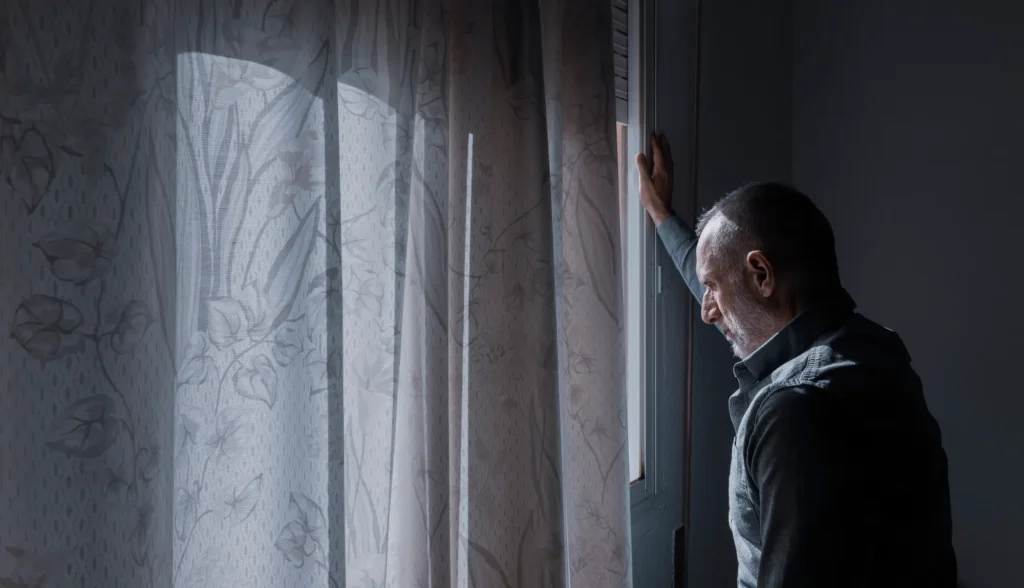
This is Oxford’s definition of grief: deep sorrow, especially that caused by someone’s death.
Sounds very cold and impersonal. But I can understand why. Unless one has walked the walk, shed the tears, and suffered from all the ravages of grief, it is impossible to grasp the conditions of grief. Or the self-torment that the one left behind often indulges in.
Let me pose a question to those reading this who may be experiencing grief. Answer it honestly. DO YOU STILL LOVE YOUR DEPARTED LOVED ONE? Ninety-nine out of one hundred of you likely answered yes.
Grief is a journey that everyone who has experienced or will experience it will one day walk. In one lifetime or another. Just as God intended.
What? How can you say that? God can’t be that cruel.
That’s what you are probably thinking right now. Take a deep breath and contemplate that for a moment. Would everyone on this planet experience grief in their lifetime if God did not intend it to be so? Accepting this notion leads to another question.
What does God expect us to learn from grief?
I can’t speak for God. I can share what I have learned from grief. And what I have learned from being a volunteer for a Hospice bereavement team. Grief cleanses you. It brings one to the lowest point in one’s life. Why? To prepare you for a new life, one you are now being compelled to create.
How many wounded veterans who have lost limbs in battle had to learn to walk with artificial legs, if they were lucky enough to avoid being wheelchair-bound for the rest of their lives? Or perhaps have artificial arms and hands to try to accomplish the simple task of eating? Did they give up when the going got tough? No. They learn to adjust while being grateful for being alive.
Grief is a gift from God.
Nothing exists that can strip one bare like grief. Grief is the ultimate self-reflection. When we are grieving, we dive deep into a pool of what-ifs, if-onlys, why did she/he have to leave me, and a myriad of other emotions meant to cleanse us. Meant to strengthen us. Meant to awaken us to new possibilities we’ve put aside long ago.
There is a distinct sense of freedom one eventually attains in the later stages of grief. The world doesn’t seem so foreboding because we’ve survived the worst scenario it could throw at us. Now we can view future challenges as minor barriers in life and laugh them off.
I know this may all seem like a fantasy for those still in a deep state of grief. I would have when I was in that stage of grief. I have the advantage of seeing how all this works from volunteering and attending grief meetings at Hospice. I’ve seen many experience their worst days, and many believed I was a crazy person when I suggested much of what is in this article to those around the tables. And I have had many of them thank me a year or two later when they finally started on their new lives. Over the last three years, six couples have met there, and three of them are already married.
So, yes. Life goes on. What we do with it is entirely up to us. However, one thing is sure: all those who grieve will go through the most difficult time of their lives. Hang in there. It gets better. And if you choose, it gets spectacularly better.
_______________________________________________________________________________________